The Origins of Palestinians: Are They Half Egyptian and Half Saudi?
Hammad’s Controversial Statement
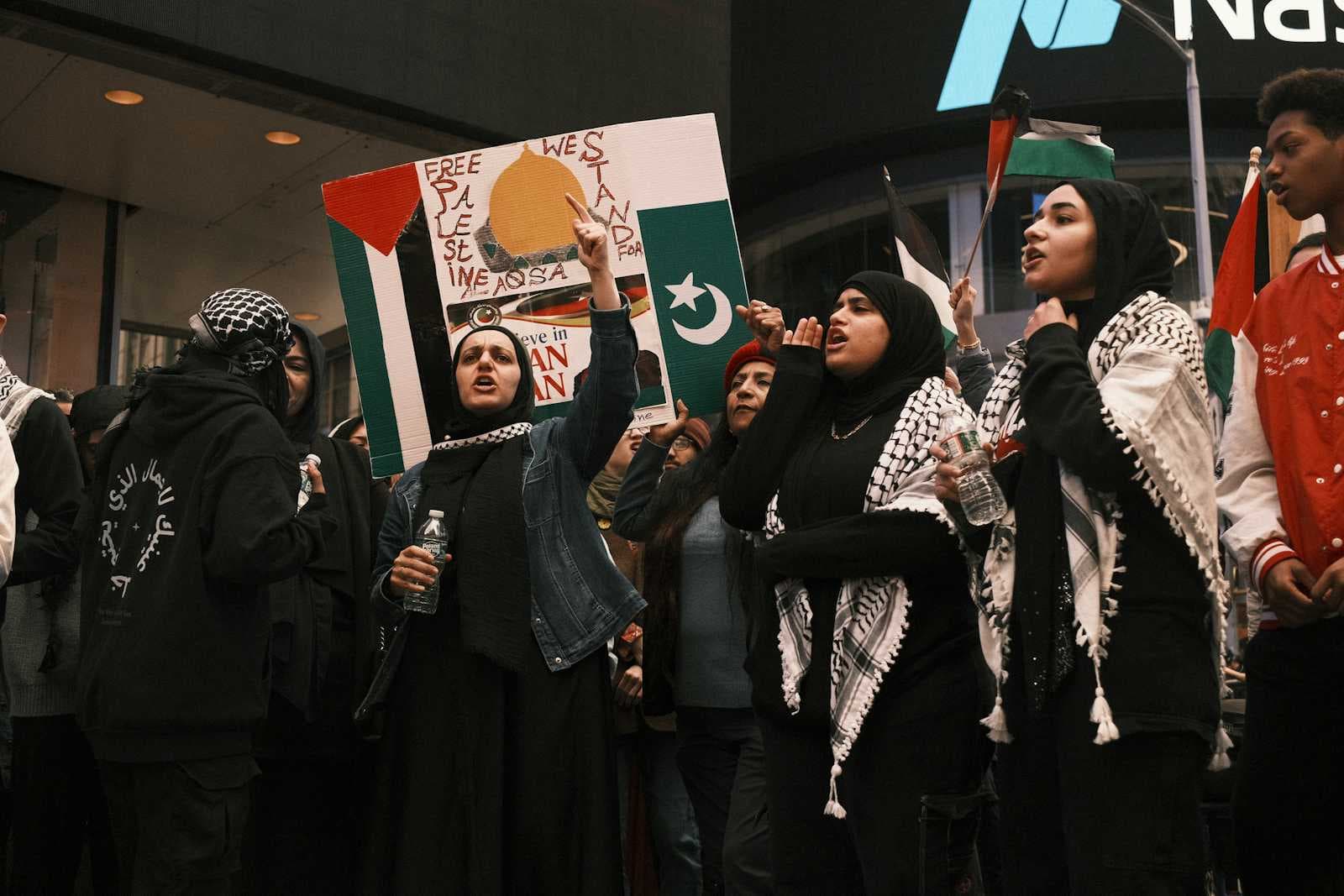
During a recent interview with an Egyptian television channel, Hamas leader Fathi Hammad sparked controversy by claiming that half of the Palestinians are Saudi and the other half are Egyptian. He expressed frustration over the lack of support from other Arab countries for Gaza. While his statement may have been intended to appeal to Arab solidarity and garner support for the Hamas-ruled territory, it is crucial to examine the historical accuracy of his claim. (1)
Historical Context and Complex Heritage
Firstly, it's important to note that Fathi Hammad is a political figure, not a historian. Which means his expertise is in politics, not in history.
Palestinian ancestry is far more intricate than a simple 50/50 split between Egyptians and Saudis. If you ask if Palestinians have Arab origin, the answer would be both yes and no. When Muslims conquered Palestine in the 7th century, the region was already populated, primarily by Christians. Muslim rulers did not expel them, nor did they colonize the land. Although Arab immigration occurred, it was mostly organic and insignificant. (2)
What we see in history is an organic mix of indigenous people with immigrants and those from nearby lands, like Egypt and Syria. We also see conversion to Islam and this cultural evolution that is known as Arabization. But the Arabs did not just appear in Palestine in the 7th century. The Nabataeans were Arabs who inhabited Jordan and Palestine in the 3rd century (3). The Natufians, ancestors of modern Arabs, lived in Palestine as early as 12,000 BC (4).
So Arabs have always been part of the land. After the Islamic conquest, the Arabization of Palestine happened as a gradual process until the population was almost entirely culturally Arab.
Who is Fathi Hammad?
Cultural and Genetic Integration
Palestinians today are the result of millennia of cultural and genetic mixing involving various peoples who lived, settled, and invaded the land. This is not unique to Palestine; societies globally have undergone similar processes. Modern Egypt, for instance, is a product of ancient Egyptians intermingling with Arabs, Nubians, Greeks, and others. Similarly, the population of Spain reflects a mix of Roman, Visigoth, Moorish, and other influences.
The idea that Palestinians must maintain racial purity to be considered indigenous is untenable. No society can sustain genetic homogeneity over centuries, especially smaller populations. Isolation could lead to inbreeding and genetic issues, threatening long-term survival.
The Al-Masri Surname: Evidence of Mixed Heritage
Hammad's argument about Palestinian origins relies heavily on the presence of the Al-Masri surname, which means 'the Egyptian.' This simplistic approach overlooks the complexity of historical and genealogical ties. Surnames can be acquired through various means, including marriage and migration. Therefore, having the Al-Masri surname does not definitively indicate Egyptian ancestry. It more likely signifies intermarriage and cultural blending over generations.
Even if a significant number of Al-Masri families moved to Palestine, they would have inevitably integrated with the local population. The presence of shared surnames with neighboring countries is common globally and does not undermine a people's indigenous identity.
According to Forebears, there are approximately 22,000 Palestinians with the Al-Masry surname. That is not even close to half of the population.
Final Thought.
Hammad is a controversial figure who hasn’t always used appropriate language to represent the Palestinian viewpoint (5), and his sloppy remarks don’t align with history or with how Palestinians perceive their origin. When we discuss history, we should cite historical records, reputable historians, and academic works. We should not base historical narratives on what politicians say.