What Did Barbary Pirates Really Want?
The untold story of the Barbary pirates
Barbary Pirate Raids
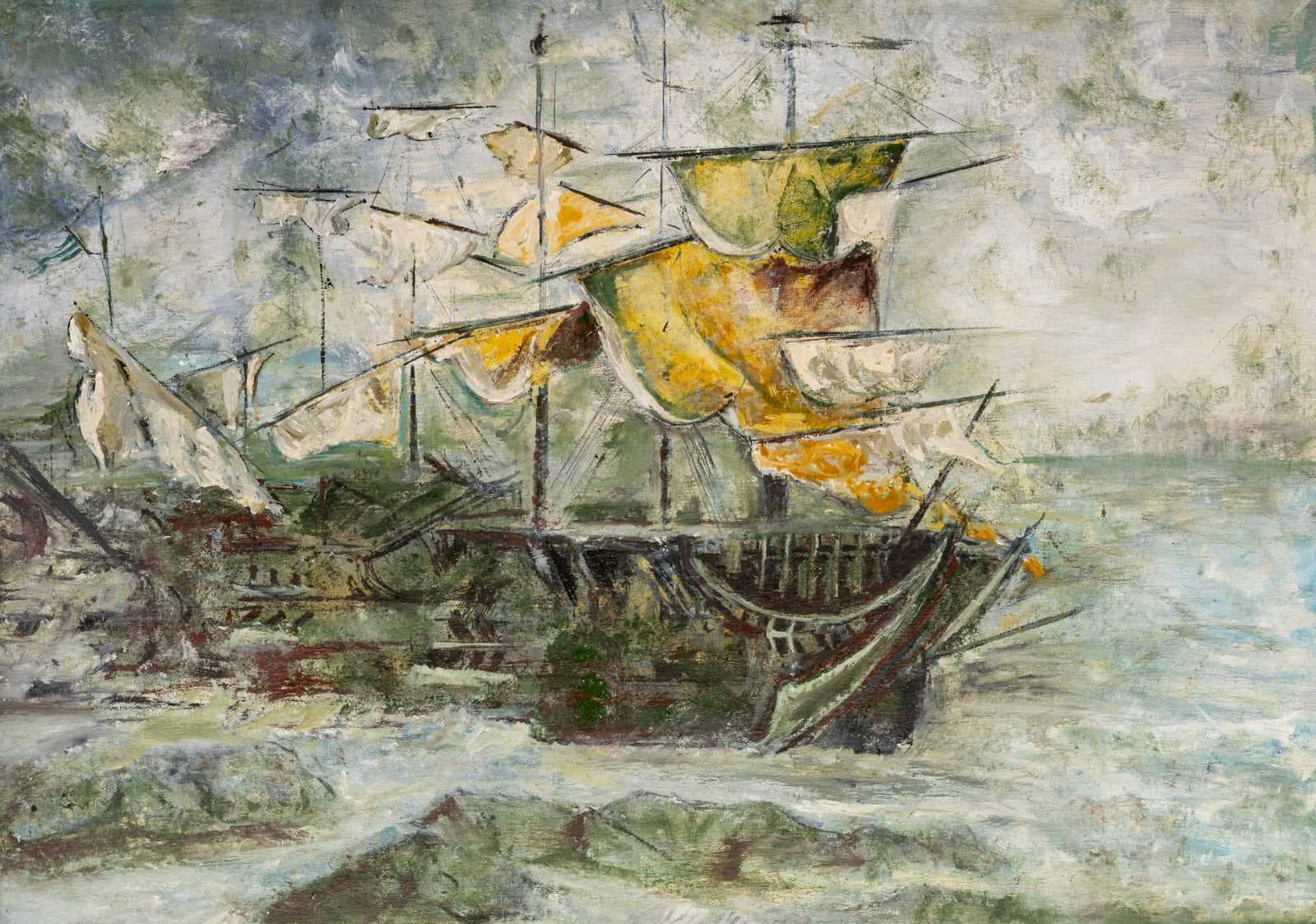
On June 20, 1631, the fishing village of Baltimore, Ireland, woke up to a violent attack by Algerian corsairs, led by the Dutch renegade Murat Reis. They captured over 100 villagers from their homes, chained them up, and loaded them onto ships headed for slave markets in North Africa. Those who fought back were killed on the spot. The raid on Baltimore wasn’t the only one. The corsairs routinely targeted coastal towns from Iceland to Italy between the 16th and 19th centuries. These were the feared Barbary pirates, also known as the Muslim corsairs who terrorized European waters for generations.
But that is not the whole story. Not even half of it.
This selective narrative dominates the coverage of the Barbary corsairs’ story today. Some online forums use it in debates about immigration and religious conflict, weaponizing the violent side of it to justify certain agendas. But like most historical events, the actual story of the Barbary pirates is not black and white. The untold key details reveal mutual aggression, retaliation, and a cycle of violence that spanned many years.

Missing Pieces of the Story
The eye-opening book "Piracy, Slavery, and Redemption: Barbary Captivity Narratives from Early Modern England," published by Columbia University Press, sheds light on this often overlooked historical complexity. The authors give us important context that’s usually missing from talks about Barbary pirates.
As they say in their insightful introduction, "Although the North African privateers sought profit from capturing Britons and other Europeans, they also wished to retaliate against attacks on them by these same Europeans, whom they and their Muslim co-religionists had encountered as marauding crusaders and piratical ifrangi since the medieval period."
This quote really changes how we think about that time. Many of North Africa’s maritime actions were actually responses to ongoing European attacks rather than unprovoked aggression.
Uncovering European Aggression
The book points out that between 1573 and 1644, there was a constant stream of attacks from Spaniards, Portuguese, Maltese, English, and other Christian powers on North African cities and trade routes.
Take, for instance, a shocking incident on October 15, 1584, when Venetians captured a Tunisian ship on its way to Tripoli. The Christian forces killed everyone on board—50 Moors, 75 Turks, 174 Christian converts to Islam, and 45 women. An Englishman named Thomas Saunders, who had been a captive in Tripoli just a year earlier, called this massacre “God’s just judgment on the infidels.”
In the 16th century, as Spanish and Portuguese forces gained the upper hand with better technology, they terrorized the African coasts. ” Thousands of Muslims were imprisoned, marked, and chained on warships from Malta, Italy, and France. Just in the first decade of the 17th century, over 5,500 Muslim captives were held in Venice and Malta.

A Cycle of Retaliation
The idea of innocent Europeans being victimized by Muslim pirates falls apart when we look closer. Even European captives acknowledged the role of their own countries in provoking these attacks. An English captive named John Rollins admitted that the Algerians mistreated the English captives because the English fleet had tried to set fire to the Algerian harbor months before.
In an extraordinary exchange, the Algerian ruler wrote directly to King James I of England in 1624, saying, “Your majesty's subjects did take some Moors and Turks, and now our captains did take certain Englishmen and sold them, which if your majesty shall be pleased to send us the Moors and the Turks, we shall suddenly and out of hand put the Christians at liberty.”
This letter shows a straight-up truth: English aggression led to Algerian counter-aggression. During this time, many Moors and Turks were held in jails in England, Ireland, and Wales and later sold as slaves in Spanish towns, or they were executed as pirates.

Deeper Reasons Behind the Barbary Pirates
What’s perhaps most interesting is the story of the Moriscos—Muslims who were forced to leave Spain. After living in the Iberian Peninsula for centuries, hundreds of thousands were uprooted, separated from their families, and lost their homes just because of their faith.
Many of these displaced people found refuge in North African coastal cities, where they redirected their sailing skills against their former homeland. As historian Al-Makiri put it, “They lived in Salé, and their sea jihad is now well-known.” These were once law-abiding subjects in Spain and Portugal who became “embittered sea raiders” after being kicked out.
The book explains, “Many had firsthand experience of Christian violence when they fled Spain and France to North Africa, having lost their property, been separated from their kids, and exiled due to their faith. They believed they deserved vengeance.”
The Stigmatization of Converts
Another intriguing aspect highlighted in the book is how Europeans who converted to Islam in captivity were treated. An appendix includes “The Laudian Rite for Returned Renegades” from 1637, outlining the public penance required of anyone who converted to “Turkism” (Islam) and later came back to Christian society.
These converts had to stand outside the church during Sunday service “wearing a white sheet, with a white stick in their hand, head uncovered, looking miserable,” begging on their knees for forgiveness. This kind of public humiliation speaks volumes about the religious tensions that existed during that time.
Looking Beyond the One-Sided Story
Piracy, Slavery, and Redemption challenges us to look past the oversimplified ideas of “Muslim pirates attacking innocent Christians” that can still be found in certain corners of the internet these days. Sure, Barbary pirates did capture Europeans and sell them into slavery, but European powers were doing the same, often on a much larger scale and with more destruction.
The raids and captures were part of a complicated cycle of retaliation driven by everything from religious conflicts to political expulsions and economic motivations on both sides. The classic “clash of civilizations” narrative often thrown around doesn’t capture this fundamental historical reality.

A Fuller Perspective
By bringing back this forgotten context, we can get a fuller picture of a complicated historical period that doesn’t just boil down to talking points in today’s debates about immigration or religious issues. This dangerous approach breeds intolerance and leads to conflicts. What we truly need is to fully understand historical events in their proper context so we can learn from them and bridge the gaps rather than deepen divisions.
**This blog post was inspired by Paul’s Blogging Theology video “Barbary Pirates EXPLAINED—What the West Won't Tell You.” I highly recommend subscribing to his Youtube Channel if you like historical and religious discussions away from modern influences.
If you're curious about the history of slavery in Islamic contexts, check out Professor Jonathan A.C. Brown’s book “Slavery in Islam,” which offers deep insights into this often misunderstood topic.