Reasons Why Early Jews Accepted the Dome of the Rock
Jews in early history didn't see it as a violation.
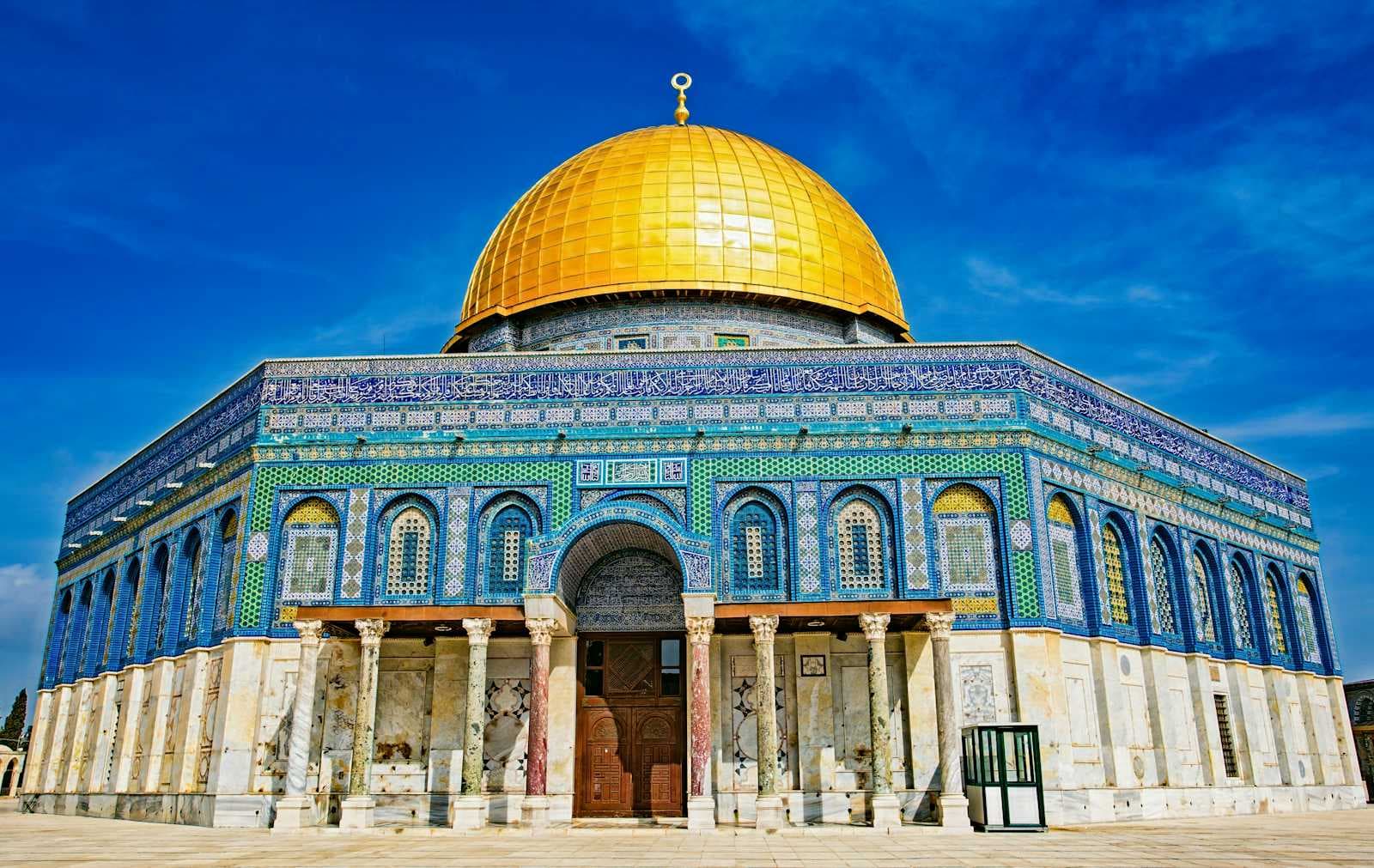
In 691–692 CE, the Umayyad Caliph Abd al-Malik commissioned a monumental Islamic shrine at a site believed to have once hosted the First Temple of the Children of Israel. Reading that today, you’d expect fierce Jewish opposition, like protests, outrage, or even religious backlash to defend what’s today the holiest site in Judaism. But that is not what happened. What happened was a complete silence that challenges everything we hear today on certain corners of social media.

Behind the Jewish Silence
When you dig through historical records, Jewish and non-Jewish, you won’t find a single clear condemnation or accusation of Muslims violating a Jewish holy ground. No protests, outcries, and no attempts to reclaim the site. Not even a single complaint. In fact, early Jewish writings are silent on the matter altogether.

And that silence is deafening. We’re talking about a place that today is described as the most sacred location in Judaism—yet there was no resistance when a permanent Islamic structure was built on it. Imagine if Muslims built a mosque in the heart of the Vatican, or Christians erected a church on the grounds of the Ka’bah. The global outcry would be unstoppable. So, if the Temple Mount held that same intensity of holiness for Jews in the 7th century, wouldn’t history have recorded their resistance?
But it didn’t. And that raises one massive question: why?
I’ve spoken to Jews about this—some were surprised, some speechless. Many had never even thought about it. Nobody seems to have a concrete answer, but here are some grounded theories based on the historical context:
The site’s importance may have been tied only to its past as the location of the temple.
Some Jewish traditions view its relevance as tied to the future arrival of the Messiah, not the present.
Jewish law, for centuries, prohibited Jews from entering the Temple Mount for fear of impurity—possibly weakening the emotional connection to the site.
Under Muslim rule, Jews were treated better than they had been under the Byzantines. They were allowed to live in Jerusalem again and practice their faith freely. So to many Jews, Muslim rule felt more like relief than occupation.
Global Silence Too

It wasn’t just Jews. The international reaction was also eerily quiet. Aside from a few Byzantine religious leaders blaming their losses on divine punishment, nobody else protested. There was no objection from historians, travelers, non-Muslim communities living nearby…nothing. The construction of the Dome of the Rock happened without anyone claiming it was a violation.
“Next Year in Jerusalem”
That phrase—probably the most well-known Jewish reference to Jerusalem—didn’t even emerge until centuries later, first penned by a poet in the 10th century. And even then, it was more about spiritual longing than political ambition. There is no mention of the Dome, no demand for reclaiming the site, no accusation against Muslims… just a symbolic connection.
Modern-Day Jewish Division

Fast forward to today, we see an evolution in the Jewish position. Modern Zionist rhetoric has gained momentum, pushing for the rebuilding of a Jewish temple right on top of the Dome of the Rock. But many Jews around the world—inside and outside Israel—reject this idea. Some cite religious reasons, saying only the Messiah can authorize a temple. Others fear political fallout and bloodshed. Even today, we don’t see a single clear Jewish position that everyone stands behind.
This division within the Jewish community undermines the claim that the Dome was ever seen as a violation of sacred space. If Jewish ancestors didn’t object, and many Jews today still don’t support this whole idea, how strong is the claim, really?
Muslim Respect for Other Faiths

Let’s go back even earlier. When Umar Ibn al-Khattab entered Jerusalem in 637 CE, he was invited by Patriarch Sophronius to pray inside the Church of the Holy Sepulchre as a gesture of welcome. A generous invitation many would have accepted without a second thought. But Umar declined—not out of disrespect, but because of it. Umar didn’t want future Muslims to attach religious significance to the church and risk its status as a Christian holy site.
That act of restraint speaks volumes. It gives us important context. Muslims weren’t out to replace or erase holy sites—they were mindful of preserving them. That makes it even more unlikely that they would have taken over the Temple Mount against the wishes of the Jewish community.
The Islamic Perspective

The Jewish view of the site has shifted over time, but the Islamic stance has been consistent from the beginning. Islam sees itself not as a break from the past, but as a continuation of it and a restoration of faith and tradition that had been lost for quite a long time. Muslims believe the prophets of Judaism and Christianity were all part of the same divine message. Abraham, Moses, Jesus, and Muhammad (peace be upon them all)—all messengers of the same God.
So when Muslims built the Dome of the Rock, it wasn’t to erase what came before. It was to honor it and set things back in place. In that sense, the structure wasn’t a violation but a validation of divine heritage.
Some early Christian sources—like The Marriage of the Virgin—even suggest the Dome was modeled after the ancient Temple of Solomon. While that’s debated today, it still gives weight to the idea that Muslims were preserving, not desecrating.
The Bottom Line
Here's the big question: If 7th-century Jews didn't have a problem with the Dome of the Rock, why do some Jews today see it as a violation of their religious spot? Why would they understand this issue better than their ancestors did?